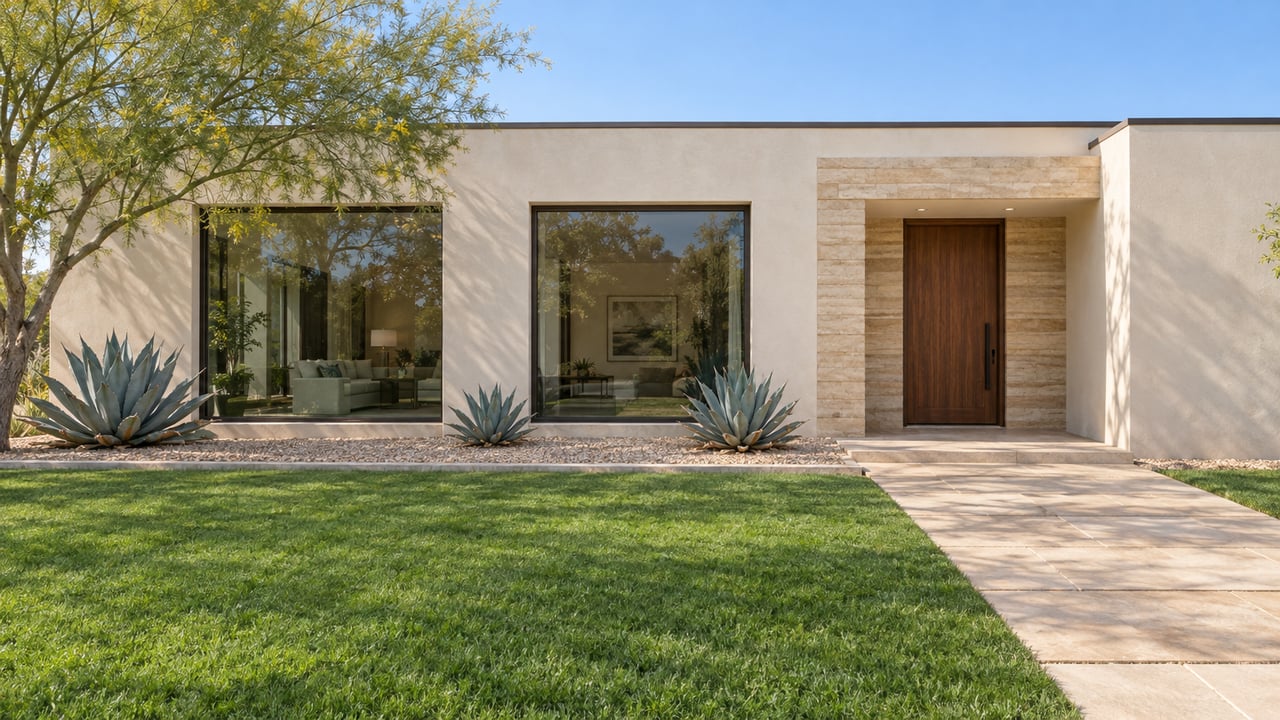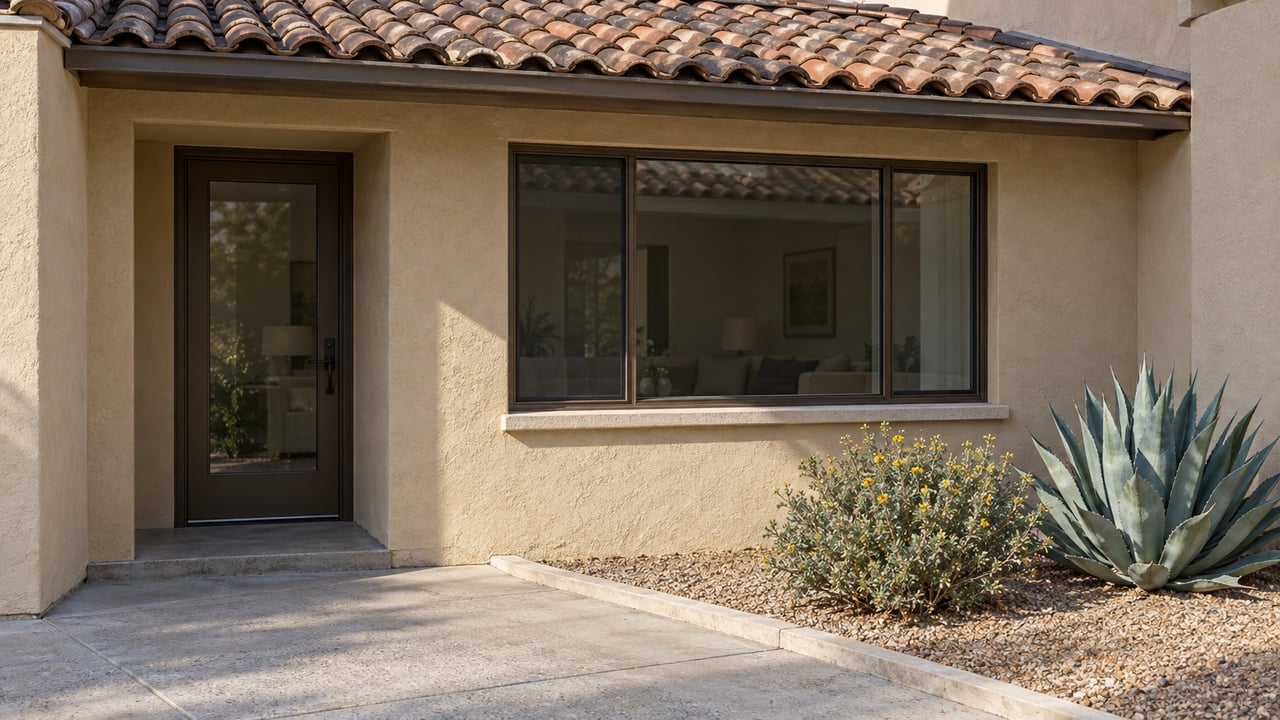
Ironwood Country Club's original condominium sections were built between 1972 and 2008, and the terra-cotta tile roofs that cover most of that early stock were the right architectural choice for the desert climate. Tile roofs typically carry an expected life of 40 to 50 years, well past the point where most California insurers start asking questions. That is the part sellers and their agents tend to get right when they talk about an older Ironwood condo. What gets missed is that the same building era produced electrical panels and plumbing lines that don't get the same pass, and those are the components most likely to stall an escrow when a buyer's insurer runs its underwriting file.
Ironwood spans roughly 1,100 homes organized across 13 separate homeowners associations, ranging from those 1970s and 1980s condominiums up through Canyon View Estates, the community's newest section of 52 custom home sites. The construction window for the original condos overlaps almost exactly with the years California underwriters now treat as a red flag zone, not because of the roof, but because of what was standard practice below it.
The Systems Insurers Actually Distrust
When a California carrier orders what the industry calls a 4-point inspection, it looks at four things: roof, electrical, plumbing, and HVAC. It is a narrow, pass-fail review built for risk assessment, not a substitute for a full home inspection. Most carriers set the age trigger for this review somewhere between 15 and 30 years, with the exact number varying by company.
On the electrical side, inspectors are trained to flag specific manufacturers and wiring types with known fire-risk histories: Federal Pacific Stab-Lok panels, Zinsco panels (sometimes sold under the Sylvania-Zinsco name), and aluminum branch wiring installed in the 1960s and into the early 1970s. A panel from either of those manufacturers will typically force a carrier to decline coverage or require replacement before it will bind a policy. Ironwood's original sections broke ground in 1972, with the South Course opening in 1973 and the North Course following in 1977, putting the community's earliest construction right at the tail end of that aluminum-wiring window.
Plumbing carries its own version of the problem. Polybutylene piping, installed in an estimated 6 million homes nationally between the late 1970s and the mid-1990s, is the single biggest plumbing red flag on a 4-point form because it is prone to cracking and splitting when exposed to chlorinated municipal water. That installation window lines up with most of Ironwood's condo-era construction, not just its first few years.
The Roof Gets the Attention the Panel Deserves
Mercury Insurance, which writes a significant share of California homeowners policies, publishes a graduated rule rather than a single cutoff: shingle roofs older than 25 years are typically ineligible for a new policy unless they pass a credentialed inspection, roofs between 20 and 25 years can still qualify for full replacement cost coverage if an inspector confirms at least five years of remaining life, and roofs under 20 years are usually approved without special conditions. Tile roofs are treated far more generously, often accepted up to 40 or 50 years because the material simply lasts longer.
That distinction matters here because Ironwood's condo stock is described as having neutral-toned stucco exteriors paired with terra-cotta roof tiles, not asphalt shingle. A shingle roof from 1978 would already be well past Mercury's outer limit. A tile roof from the same year is near the upper end of that expected life. The roof age that shows up in a listing description is the number a buyer instinctively worries about. Even near the end of its expected life, a sound tile roof is often less of an underwriting concern than an outdated panel or flagged plumbing.
Why the Slow Days on Market Start to Make Sense
Condos in Ironwood Country Club were sitting on the market an average of 119 days as of a May 2026 snapshot, compared to a national average of 57 days for the same period. Across the wider community, homes were averaging 81 days on market against a 48-day national figure in a similar mid-2026 window, with the median sale price for the broader neighborhood at $862,500, down 4% from the prior 12 months.
A gap that wide, roughly double the national pace on the condo segment specifically, is consistent with financing and insurance friction that shows up late in a transaction rather than at listing. A buyer can tour a unit, fall for the mountain view, and get an accepted offer without anyone raising the electrical panel. The problem tends to surface only once that buyer's insurance carrier requests its own inspection, sometimes weeks into escrow, and by then the deal has already lost momentum even if it eventually closes.
The 13 HOAs Don't Split Responsibility the Same Way
This is where Ironwood's structure adds a layer that a single-HOA community doesn't have. HOA dues across the 13 associations range from roughly $250 to $1,200 a month, and what that fee covers is not uniform. In some sections, the association is responsible for exterior maintenance and landscaping while the owner maintains everything inside the walls. In others, particularly the freestanding homes classified as condos, the line between what the HOA maintains and what the owner maintains falls in a different place entirely.
That means a buyer can't assume the association will pay for a shared electrical upgrade or a plumbing stack replacement just because it technically sits behind a common wall. Whether a repair falls to the HOA or the individual owner depends on which of the 13 associations that specific unit belongs to, and that answer has to come from the HOA documents themselves, not from a general assumption about how condos usually work.
Before You List or Write an Offer
For sellers with a condo built in the 1970s or 1980s, ordering a 4-point inspection ahead of listing, rather than waiting for a buyer's insurer to request one, turns a potential mid-escrow surprise into a known cost that can be priced, credited, or repaired on the seller's own timeline. A few things worth confirming before that inspection happens:
- The manufacturer and age of the electrical panel, since Federal Pacific and Zinsco panels are the two names inspectors are trained to flag first
- The supply line material behind walls and under slabs, since polybutylene pipe from this era is the plumbing red flag carriers care about most
- The roof material specifically, since tile and shingle are treated on completely different underwriting timelines even at the same age
- Which of Ironwood's 13 HOAs the unit falls under, and what that association's governing documents say about who is responsible for the systems a 4-point inspection would flag
For buyers, the practical move is to get quotes from insurers before removing contingencies, not after. A pre-approval on the mortgage side says nothing about whether a carrier will actually bind a policy on a 50-year-old panel.
Frequently Asked Questions
Does this apply to Canyon View Estates or does it only affect the older condos? Canyon View Estates is Ironwood's newest section, built well after the original condo era, so its homes are far less likely to carry the specific panel types and pipe materials that trigger the concerns described here. The friction in this piece is tied to construction date, not to the Ironwood name generally.
Does a 4-point inspection replace the home inspection I'd normally schedule? No. A 4-point inspection is a narrow, insurance-focused review of four systems and is not a substitute for a full home inspection. Buyers typically need both, and submitting a full inspection report in place of a requested 4-point can sometimes raise more questions for an underwriter than it answers, since general inspections flag cosmetic issues that don't affect insurability.
If you're weighing a condo in Ironwood's original sections, whether you're the one selling it or the one about to write an offer, it helps to have someone walk the specific HOA documents and the specific systems with you before anything is in escrow. Scott Braun Realty works these communities directly and can help you get ahead of what an underwriter will ask before they ask it.
This article is general information, not legal, tax or financial advice. Consult a qualified professional about your situation.